If you sell into Europe, 1 July 2026 may quietly start costing you money if you do not take action.
You've probably seen the headlines about a new €3 EU import fee on small parcels. If handled badly, this duty will come out of your margin on every order you ship into the EU, indefinitely.
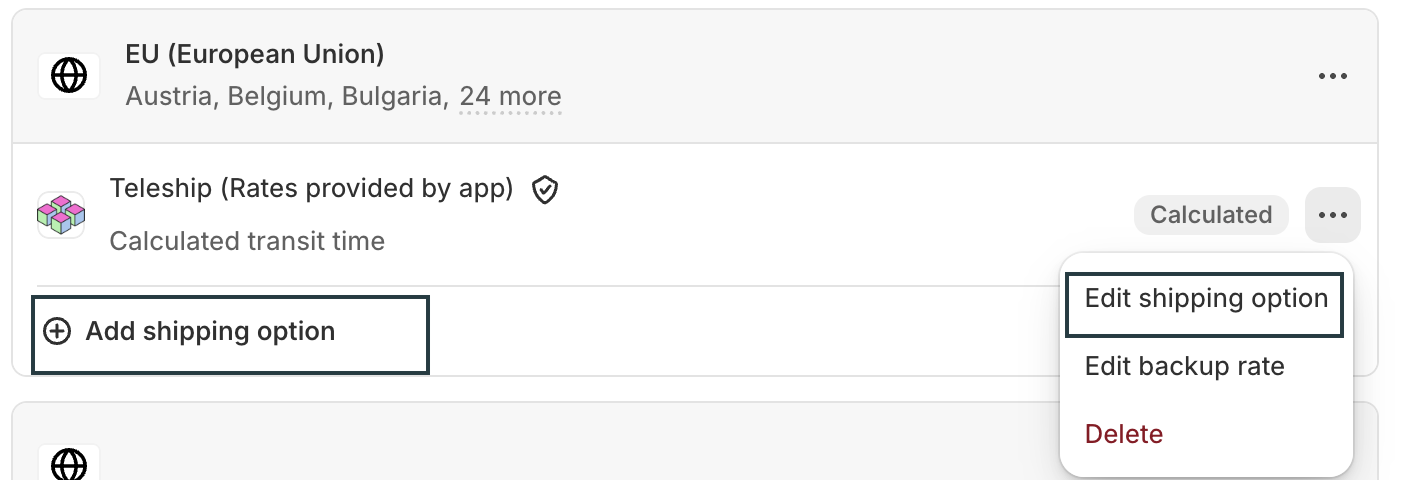
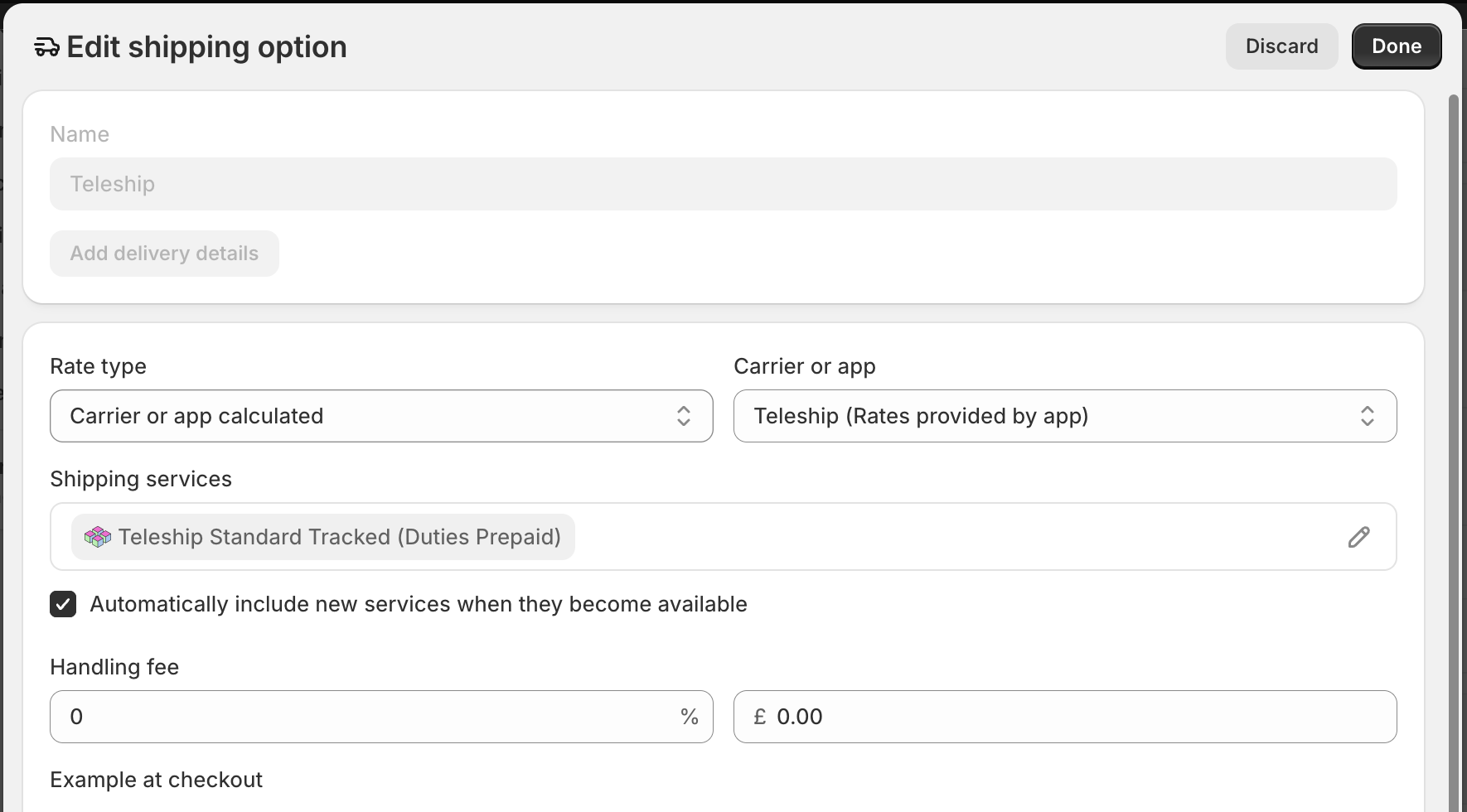
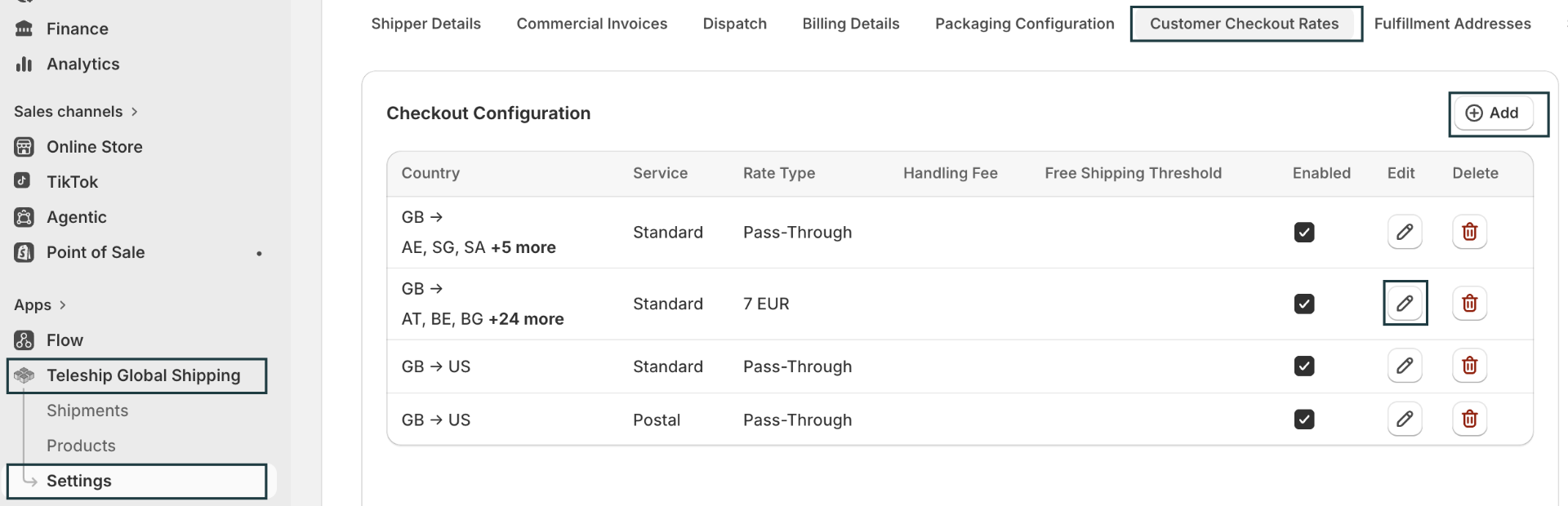
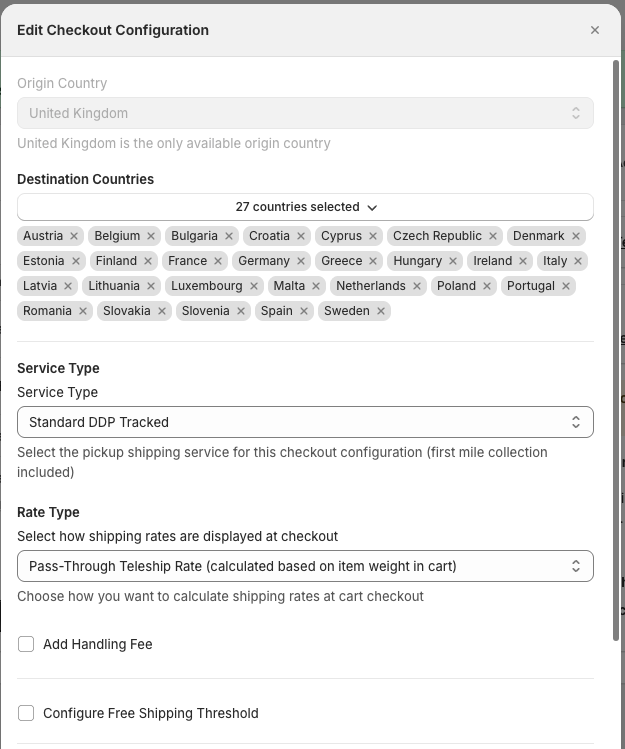
This post is in three parts: what actually changes on 1 July, the concrete steps a merchant should take to prepare, and what to configure in Teleship apps to accurately collect that new duty fee.
1. What changes on 1 July 2026
a. The €150 duty-free exemption is gone
Until 30 June 2026, consignments with an intrinsic value of €150 or less entered the EU free of customs duty. From 1 July 2026, that exemption disappears. In its place, the EU introduces a temporary flat €3 customs duty on low-value consignments (up to €150) imported from outside the EU.
This is an interim measure. It is scheduled to run until 1 July 2028, when the EU Customs Data Hub becomes operational and standard, classification-based tariffs take over from the flat rate. Until then, the €3 charge is the rule.
b. The detail that breaks most setups: it's per declaration line, not per parcel
The €3 is not charged per parcel. It is also not charged per product. It is charged per customs declaration line: at the 6-digit HS (commodity) code.
A declaration line is one or more goods in a consignment that share the same 6-digit HS code (and, where the declaration dataset includes it, the same origin). That has direct cost consequences:
- An order containing three men's shirts made of cotton, all the same commodity code (6205.20): one declaration line. One €3 charge.
- An order containing sunglasses and a t-shirt, two different commodity codes: two declaration lines. €6.
- A mixed basket spanning five distinct HS6 codes attracts €15, regardless of how cheap each item is.
Put plainly: your product data is now your duty bill. The quality and granularity of your HS classification directly determines how much duty each order attracts.
c. What's still coming
The €3 duty is not the only moving part:
- Product identifiers (merchant, manufacturer, and where available standardised codes) are voluntary from 1 July 2026, but mandatory from 1 November 2026.
- A separate €2 handling fee per consignment is expected to be introduced around November 2026. This is distinct from the €3 duty and still subject to negotiation.
In other words, 1 July is the first step in a phased reform, not a one-off event.
2. What merchants should do now
Here's how to prepare.
a. Classify and audit HS codes in your catalogue
Because the charge is calculated per HS6 declaration line, your classification is your calculation. Guessed, inconsistent, or missing commodity codes will either misfire the duty (you over- or under-collect) or fail the declaration outright at the border. Before 1 July:
- Assign accurate HS codes across your entire EU-bound catalogue. Classifying to at least 6-digit HS (8-digit or 10-digit is even better).
- Add country of origin to every product. This is a requirement in customs.
- Standardise the data so identical products consistently resolve to the same HS6, which is what lets multi-item baskets collapse into a single charge. If you have 10-digit classified, we will automatically bundle HS6 codes in the customs declarations.
b. Decide who pays and configure it
If you do not wish to absorb these costs, you have two viable options:
- Raise your prices for EU customers only to build the expected duty into the product price. Simple, but blunt: you're estimating an average rather than charging the real per-order amount.
- Collect the duty from the shopper at checkout, as a distinct line item separate from VAT and shipping. This passes the actual calculated charge to the customer and keeps your landed-cost transparent.
Either way, the duty should be reconciled against what you are actually invoiced. If you don't collect at all, the duty is pure margin leakage on every parcel.
c. Don't assume returns will refund the duty
The June guidance is clear that economic operators can no longer rely on the simplified invalidation route for returned low-value distance-sale consignments after release for free circulation. The €3 is not reimbursed just because the goods come back.
3. How Teleship handles this for you
This is exactly the problem Teleship is built to solve, across Shopify, Magento, WooCommerce, and other platforms.
- Classification: our apps help you assign and clean the harmonized tariff codes across your catalogue, so your declarations are accurate and your duty is calculated on real data.
- Per-HS6 calculation: we automatically determine the unique number of HS6 codes per order or per parcel, and return the applicable duty in your checkout or at label purchase.
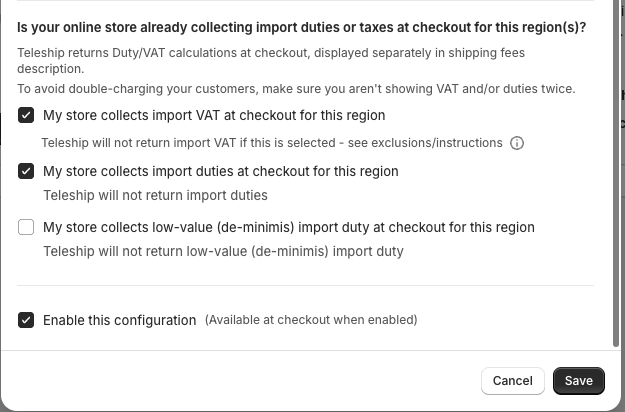
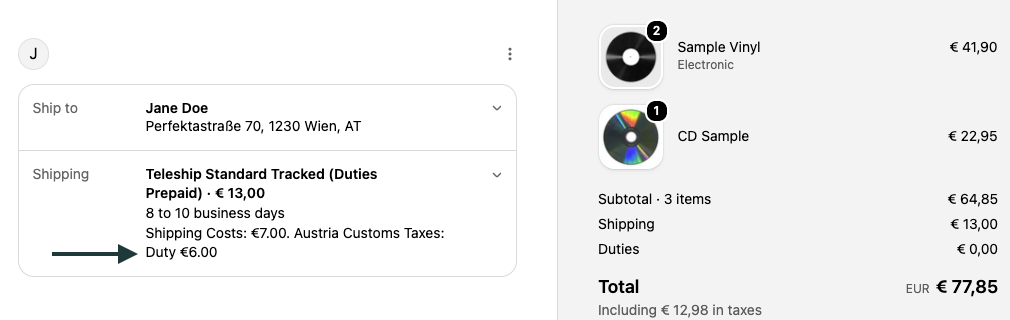
- Checkout collection: if you choose, we return the €3 duty at checkout as its own line, so the shopper pays exactly what's owed, kept separate from VAT and shipping.¹
- One-stop, duty-paid delivery: ship your orders in one click and they arrive at your customer's door duty-paid. No surcharges, no surprise fees at delivery, fewer returns from unpaid duties.
The result: every order stays profitable. You're never charging blind, and you're never quietly eating a surcharge you didn't model.
To get ready for 1 July, install the Teleship app or plugin on your store, and start shipping duty-paid in minutes.